I have vitiligo. It shows up on my hands, my wrists, my feet and around my eyes, and I will be honest: I am self-conscious about it, especially on my hands, wrists and feet.
I am writing this because I have not seen many actors talk openly about it. If you have vitiligo, or any visible skin condition, I want you to know you are not alone in the questions you ask yourself before an audition or a day on set.
I am not going to pretend vitiligo is invisible on camera or on stage. It is visible, and depending on the shot or the role, it can be a distraction. Saying that out loud is not self-criticism. It is just being honest about the work we do, where what the audience sees matters.
Being honest about that also makes it easier to plan for it, talk about it, and stop carrying it around as a secret.
The Commercial Hand Slate Question
If you audition for commercials, you know the hand slate: show your hands to the camera, front and back. For me, that is the moment I notice my vitiligo the most.
I have wondered if it has affected my auditions, especially for commercial work where hands are featured. The truth is, I cannot know. Casting decisions come down to so many things, and nobody tells you why you did not book something. I have learned to let that question exist without letting it decide how I feel about myself in the room.
Telling Your Reps and Casting
I have told my reps about my vitiligo, and I have noted it on a casting profile. I would rather the people representing me know what to expect than be surprised.
It has also opened doors in its own way: I have auditioned for roles that were specifically looking for actors with vitiligo. Those breakdowns exist, and when your reps and profile reflect who you are, you are easier to find for them.
A Suggestion for Casting Platforms
Casting profiles already include ways to share disability-related information. What I noticed is that there was no neutral option for something like a skin condition. So I suggested to Actors Access that they add a neutral disclosure option for skin conditions.
To me, a simple, optional field would let actors share it on their own terms, without having to squeeze it into a notes section or explain it from scratch every time.
Covering It on Stage: My Backstage Routine
In one theater production, I had a scene where my feet were visible. I did not make it a big conversation. I simply asked the hair and makeup person if they had makeup I could use on my feet for my vitiligo. They gave me some and showed me how to use it.
From there, I timed it so that backstage, right before that scene, I would quickly apply a layer to make it less noticeable. That was it. A small, practical fix that let me stop thinking about my feet and focus on the scene.
Talking with Hair and Makeup on Set
On set, I have explained my vitiligo to hair and makeup. One experience stuck with me. I have vitiligo around my eyes, which is more noticeable in person, and the makeup artist told me she knew someone with vitiligo and thought it was beautiful. I am paraphrasing her, but she also said they would confirm with production whether they wanted to cover it or not.
I want to be clear: I do not get offended if it needs to be covered, anywhere. That is part of the job, and the character comes first. It is just nice to know that it can be seen that way, and that the conversation can be kind and simple.
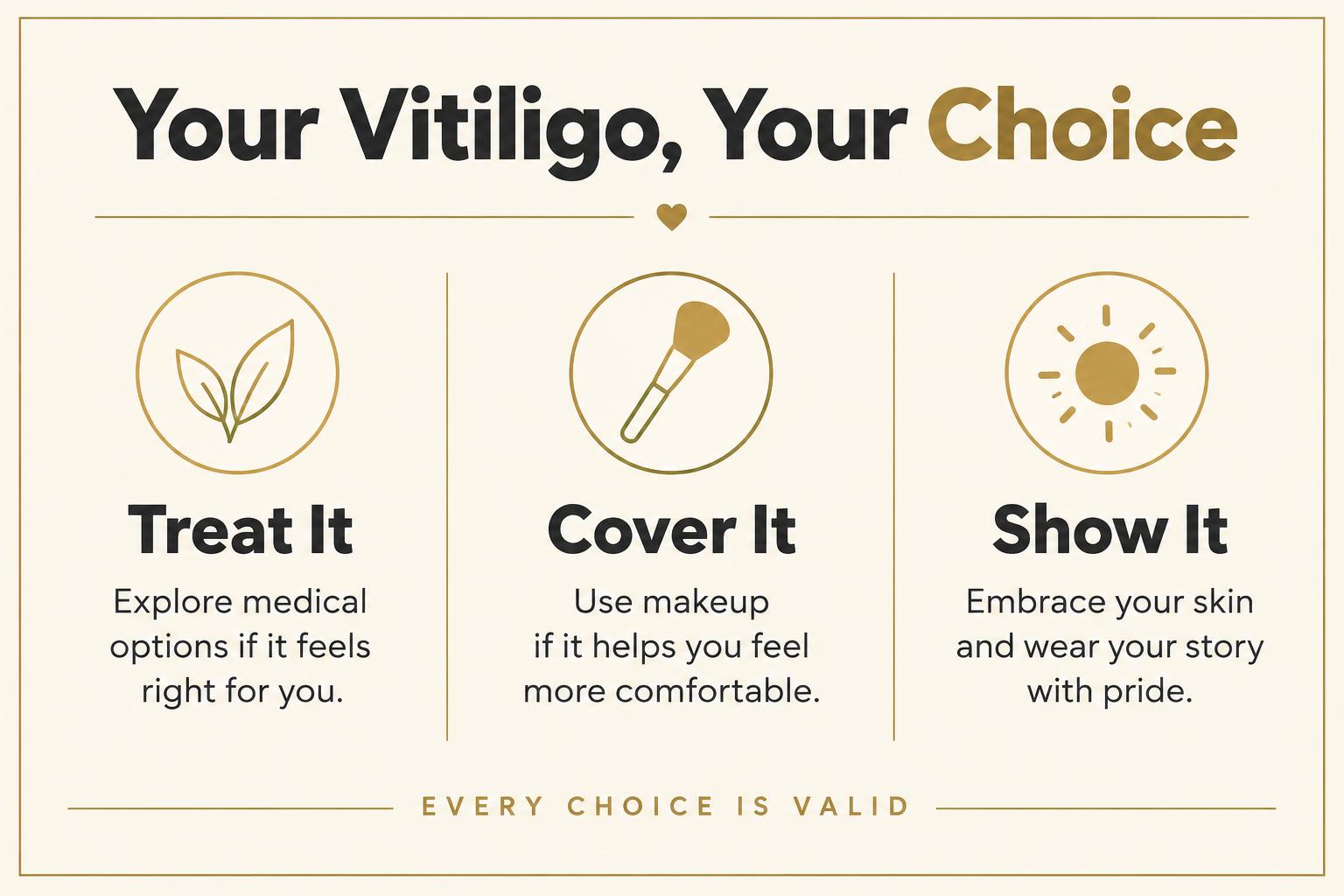
Treat It, Cover It, or Show It: Your Choice
Some people pursue treatment. Some people cover it with makeup. Some people proudly leave it visible. Each of those is a personal choice, and none of them is the wrong one. You can also choose differently depending on the role, the day, or how you feel.
If You Are an Actor with Vitiligo
Tell your reps, so they know what to expect and can submit you for roles looking for actors with vitiligo.
Consider noting it on your casting profiles, in whatever way feels comfortable.
Ask hair and makeup directly if you want coverage. A short, specific question goes a long way.
On stage, plan your timing so you can touch up backstage before the scenes where it shows.
Let go of what you cannot know about any one audition.
You are not alone in this. I hope hearing my experience makes your next slate or makeup chair conversation feel a little lighter.
Questions
Frequently Asked Questions
Free 2-minute quiz
What type does casting see in you?
Answer a few quick questions to discover your castable archetypes, roles to target, and headshot wardrobe ideas. Get your full report by email.
Most auditions come through casting platforms and your reps, not your website. Here are 7 real reasons to build an actor website anyway, and how much site you actually need.