Let me start with something most actors already know: your website is probably not where your next audition comes from.
Most film and TV auditions come through the tools casting directors use every day, like Actors Access, Casting Networks and Backstage, or through submissions from your agent or manager. Could a casting director stumble onto your site and call you in? Sure, it happens. It just is not the main way the industry works.
So why build one? Because the real value of an actor website is everything around the audition: controlling your name online, giving people a clean place to see your work, and building things you own. Here are seven reasons I think every working actor should at least consider one.
1. You Control What Shows Up When Someone Googles You
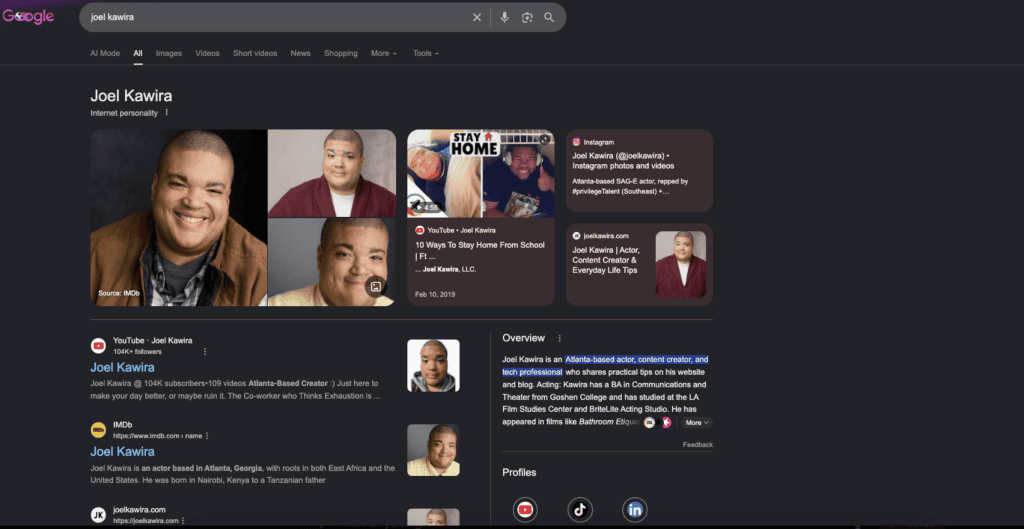
Whenever someone hears your name, after a callback, a screening or a networking event, the first thing they usually do is search for it. Without a website, Google fills that page with whatever it can find: old school pages, random directory listings, or other people who share your name.
Here is what comes up when you Google my name. My own site, social profiles, IMDb and a knowledge panel with my bio all show up together, and the story they tell is one I chose.
When other people write about you, you probably want your own site ranking above their article. A website with your name on it is the strongest way to make that happen.
2. You Own It, Unlike Social Media
Instagram, TikTok and YouTube are great, but you are building on rented land. Algorithms change, reach drops, and accounts get hacked or locked with little help to get them back.
Your website is yours. Nobody can change the rules on you or decide who gets to see it.
3. A Clean Place for Your Materials
Casting profiles are built for casting workflows. They often sit behind logins and are not great to share with a journalist, a podcast host or an indie filmmaker who just wants to see your work.
A website gives anyone a quick, simple way to find:
Current headshots
Your reel, playing without ads
Your resume
Your representation contacts
4. A Home for Your Side Business
Acting income comes and goes. Many actors have other skills they get paid for, like coaching, reading for self tapes, editing, photography or writing.
Instead of sending people a mix of DMs and payment links, your site can explain what you offer and let people book or pay you directly.
5. Getting Found by People Who Do Not Know You Yet
When you write helpful guides about things you know, search engines start sending people your way. Over time, people who have never heard of you find your articles, learn from you and start following your work.
That is exactly how many readers find this site. It keeps working while you are on set or at your day job.
6. An Email List You Actually Own
Followers are nice, but only a small share of them see any given post. An email list lets you reach people directly when you book a project, launch something or publish a new guide.
A website is the natural place to collect those emails, whether you offer a newsletter, a free checklist or a short email course.
7. A Launchpad for Your Own Projects
More actors are writing, producing and creating their own work, from short films to podcasts and web series. Those projects need a home for trailers, press, festival news and crowdfunding links.
Your website can be that home, and it makes your projects look as professional as they are.
How Much Website Do You Actually Need?
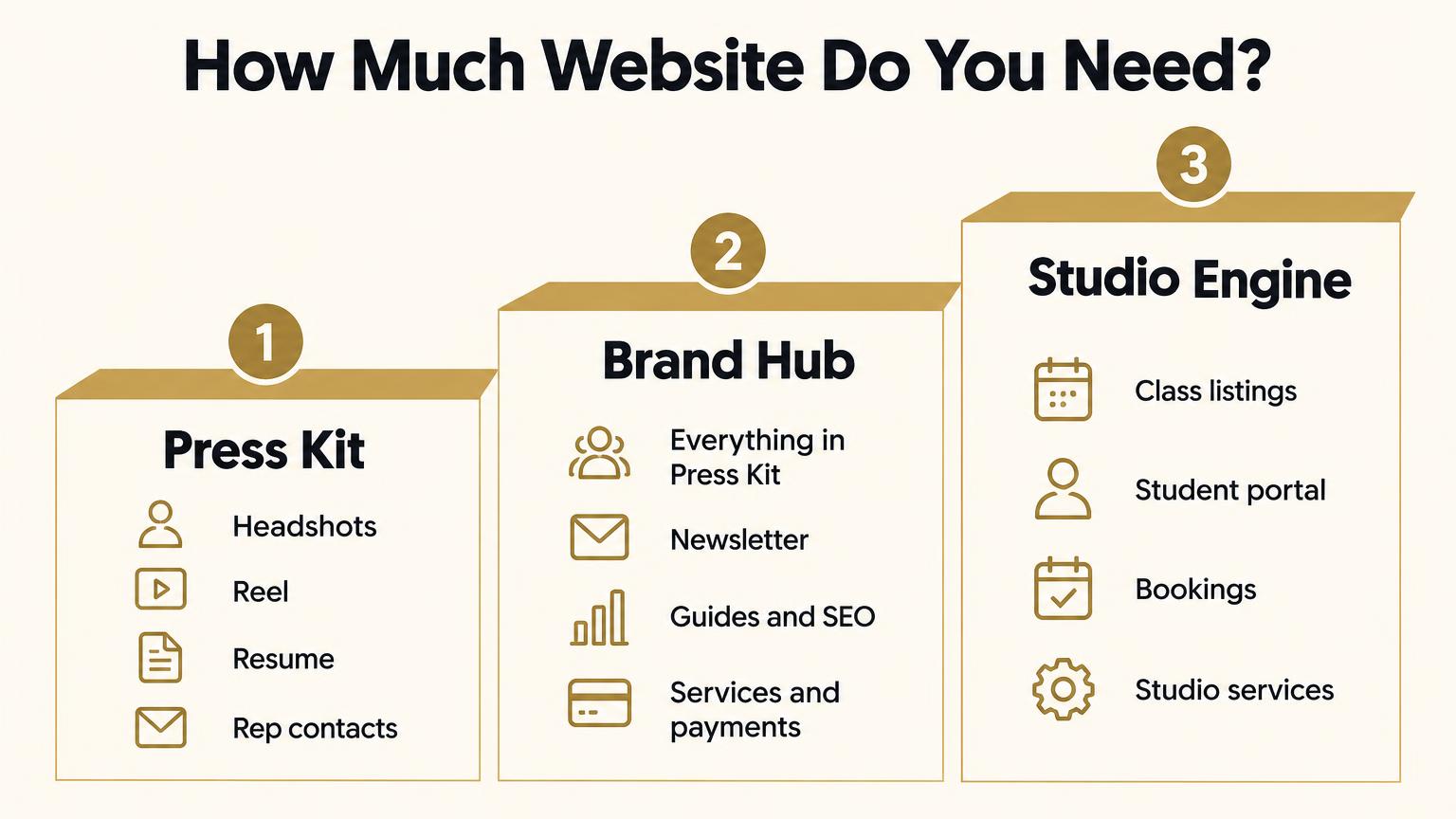
You do not need a giant website to get these benefits. Most actors fit into one of three levels:
Press Kit: a simple site for your headshots, reel, resume, bio and rep contacts. Good if you mainly want to own your name online.
Brand Hub: everything in a press kit, plus a blog, newsletter and a way to offer services or take payments.
Studio Engine: for coaches, studios and schools that teach performers and need classes, bookings and a student area.
Start with what you need today. You can always grow it later.
Questions
Frequently Asked Questions
Free 2-minute quiz
What type does casting see in you?
Answer a few quick questions to discover your castable archetypes, roles to target, and headshot wardrobe ideas. Get your full report by email.
Discover 11 practical ways actors are using AI to prep auditions, write agent emails, build their brand, and sharpen their craft — with prompts you can steal today.