Skip to content
JOEL KAWIRA

Resources · Self-Tape Gear

The self-tape equipment list actors actually need.

Casting directors watch for three things before your acting: can they see your eyes, can they hear you clearly, and is anything distracting them. Every item here exists to solve one of those. Start with a budget kit, then dig into each category for why a pick works and how to set it up.

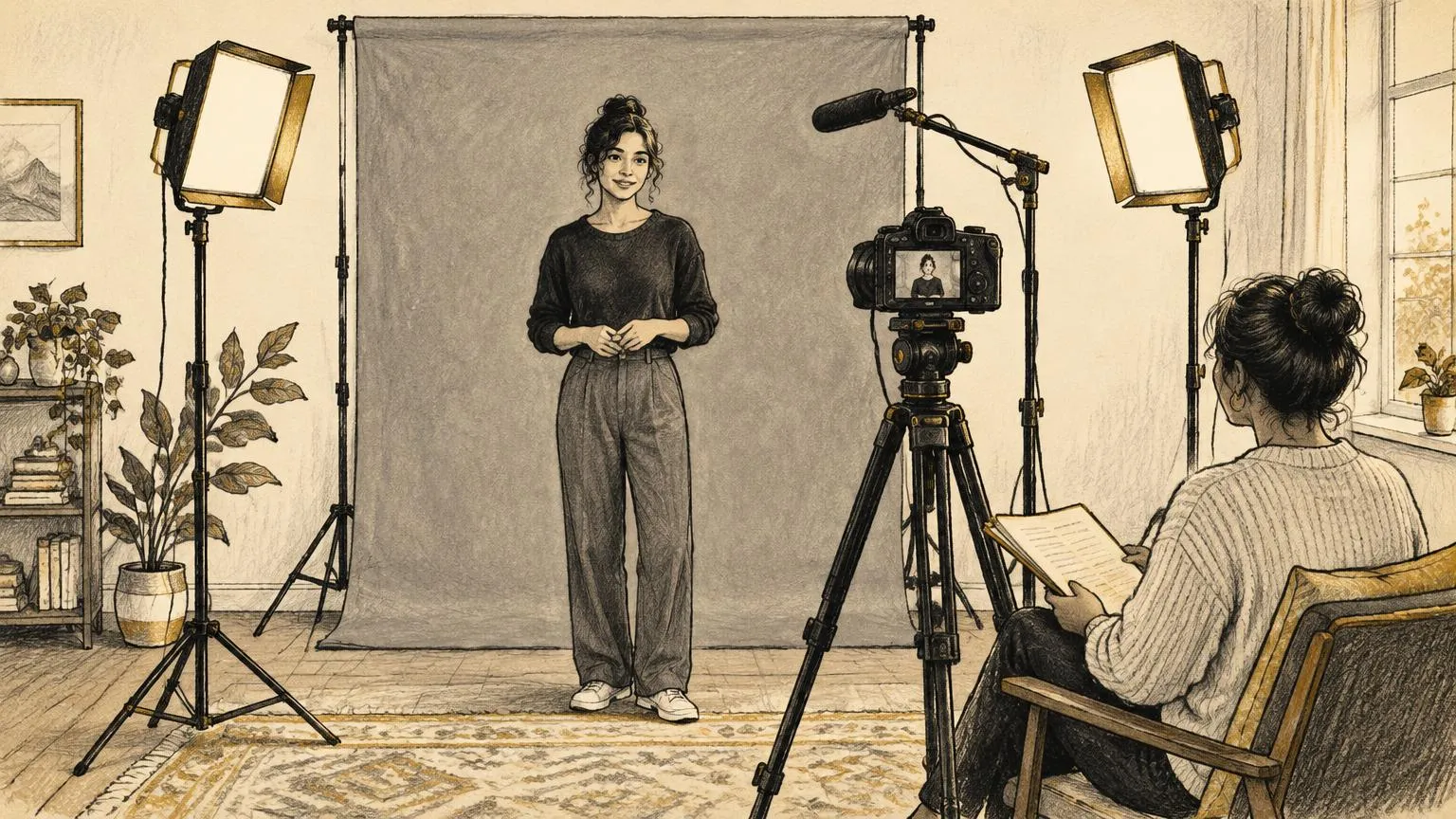
Illustration of a home self-tape studio with an actor in front of a gray backdrop, two LED lights, a camera on a tripod, a shotgun mic and a reader beside the lens

Pick your self-tape kit by budget

You do not need the pro kit to book. Most auditions are won on the starter or home studio setup.

Smartphone Starter

Under $150

Best for: New actors and small apartments

  • Phone you already own
  • Tripod with a metal phone clamp
  • One soft LED panel or small softbox
  • Clip-on or mini shotgun mic
  • Gray or blue pop-up backdrop

Covers almost every first-round audition.

Most popular

Home Studio

$350 to $650

Best for: Actors taping every week

  • Phone or compact creator camera
  • Two bi-color LED panels with diffusion
  • On-camera shotgun or wireless mic
  • Backdrop stand with crossbar
  • Blankets or rug for echo

The sweet spot for most working actors.

Pro Setup

$1,000 and up

Best for: Content creators and coaches

  • Mirrorless camera with a 30 to 35mm prime lens
  • Three-light softbox kit
  • Boom-mounted shotgun mic
  • Seamless paper or wall-mounted backdrop
  • Basic acoustic panels

Only worth it if you also make reels or content.

Category 01 · Picture

Cameras and phones

Casting needs to see your eyes clearly and in focus. A recent phone does that well. A dedicated camera mostly buys you better low light and a softer background.

Your current smartphone

$0

Examples: iPhone 12 or newer, recent Pixel or Galaxy

Why it is a good pick: Sharp 1080p or 4K video, reliable face tracking and instant upload to casting sites.

Watch out: Use the rear camera, not the selfie camera, and turn on airplane mode so calls do not interrupt a take.
Compact creator camera

$650 to $1,000

Examples: Sony ZV-1 II, Sony ZV-E10 II

Why it is a good pick: Eye autofocus that holds focus when you move, a mic input and a flip screen for checking framing.

Watch out: Small batteries. Run it on USB power for long sessions.

Mirrorless with a prime lens

$1,000 and up

Examples: Sony a6700, Canon R50 with a 35mm f/1.8

Why it is a good pick: Cinematic depth and clean skin tones that also work for reels and headshot-style content.

Watch out: More settings to learn. Overkill if you only tape auditions.

Read the full camera guide

Category 02 · Stability

Tripods and mounts

A shaky or tilted frame reads as amateur before you say a line. A steady mount at eye level is the cheapest upgrade with the biggest payoff.

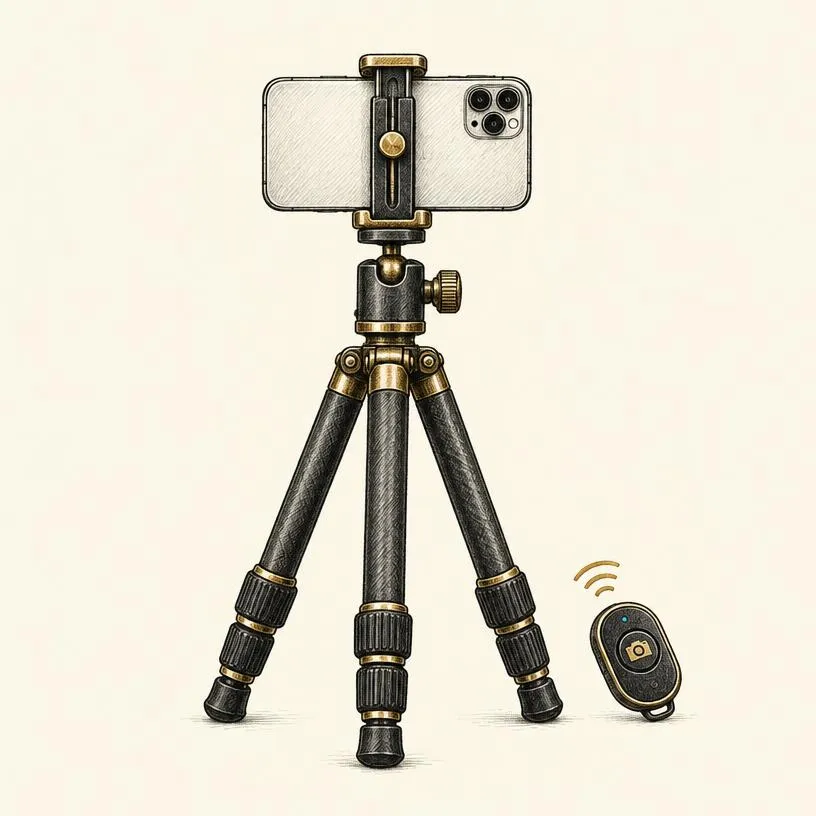
Full-height tripod with phone clamp

$30 to $70

Examples: Any 60 inch aluminum tripod with a metal clamp

Why it is a good pick: Puts the lens at your eye level standing or seated, which is the most flattering and natural angle.

Watch out: Skip all-plastic clamps. They droop slowly during a take.

Bluetooth remote

$10 to $20

Examples: Remote shutter that pairs with your phone

Why it is a good pick: Start and stop recording without walking out of frame, so you can do more takes in less time.

Watch out: Keep a spare coin battery in your kit.

Category 03 · Light

Lighting

Good light is what makes a phone look expensive. You want soft, even light on your face with a small catchlight in each eye.

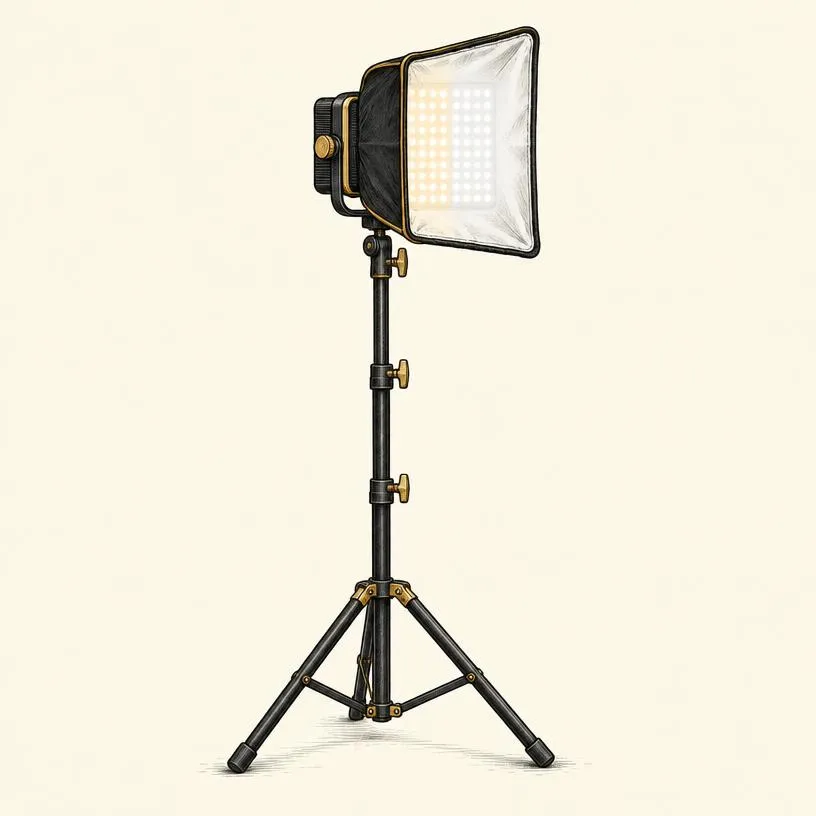
Bi-color LED panel with diffuser

$60 to $150 for two

Examples: Neewer, GVM or Ulanzi panel kits

Why it is a good pick: Adjustable warmth matches room light, and diffusion keeps skin soft instead of shiny.

Watch out: Bare LED panels are harsh. Always add the softbox or diffusion sheet.

Small softbox kit

$70 to $130

Examples: Two-light continuous softbox set

Why it is a good pick: Very soft, flattering light for dramatic reads at a low price.

Watch out: Bulky to store in small apartments.

Ring light

$40 to $90

Examples: 18 inch ring light on a stand

Why it is a good pick: Fast to set up and flat, even light for commercial reads.

Watch out: Shows as a ring in glasses and eyes and can look flat for drama. Use as fill, not your only light.

Category 04 · Sound

Microphones

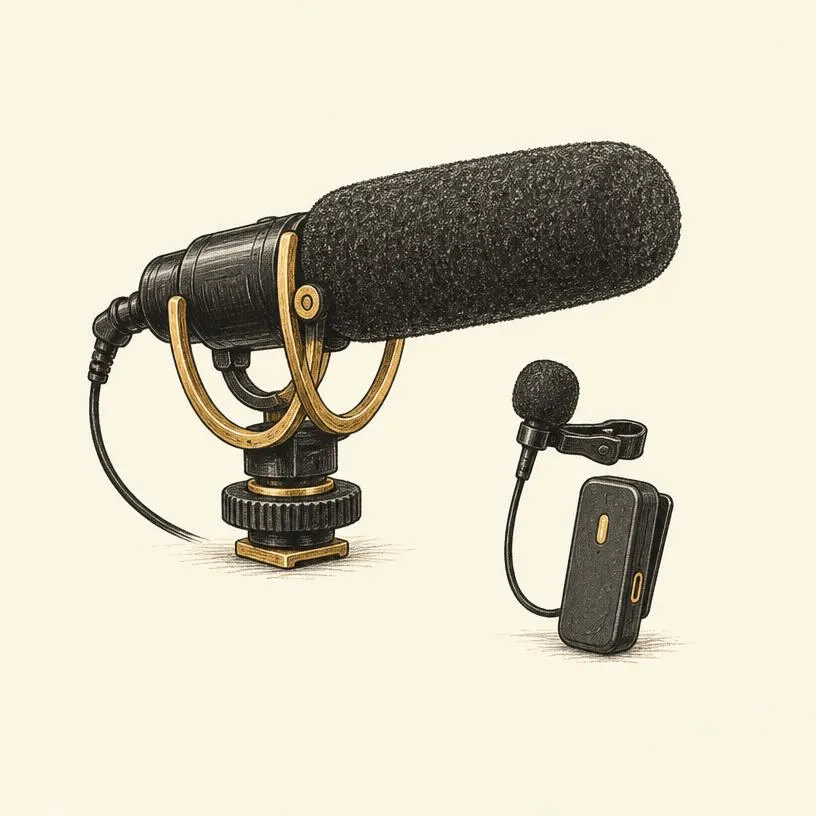
Casting will forgive average picture but not muddy, echoey sound. A small external mic close to you is often the single biggest jump in quality.

Wireless clip-on mic

$100 to $170

Examples: Rode Wireless ME, DJI Mic Mini

Why it is a good pick: Stays the same distance from your mouth as you move, so volume stays steady.

Watch out: Hide the transmitter and avoid rustling fabrics against it.

On-camera shotgun mic

$80 to $120

Examples: Rode VideoMic GO II, Deity V-Mic D4

Why it is a good pick: Points at you and rejects some room noise, with nothing to clip on.

Watch out: Picks up your reader loudly if they sit right behind the camera.

Boom shotgun

$200 and up

Examples: Overhead shotgun on a boom arm

Why it is a good pick: Broadcast-quality sound with no visible mic in frame.

Watch out: Needs an audio interface or recorder and more setup time.

Category 05 · Background

Backdrops

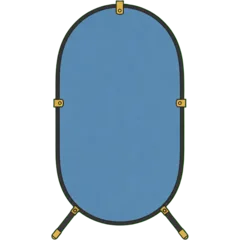
A plain, solid background keeps attention on your face. Medium blue and medium gray flatter almost every skin tone.

Pop-up collapsible backdrop

$60 to $120

Examples: 5 by 7 foot reversible gray and blue

Why it is a good pick: Sets up in seconds and folds flat, ideal for apartments and travel.

Watch out: Stand 3 or more feet in front of it to avoid shadows and visible texture.

Seamless paper roll

$90 to $180

Examples: Savage paper on a crossbar stand

Why it is a good pick: Smooth, wrinkle-free and very professional on camera.

Watch out: Creases and tears with use. Needs a stand.

Read the full backdrop guide

Category 06 · Reader

Virtual reader setup

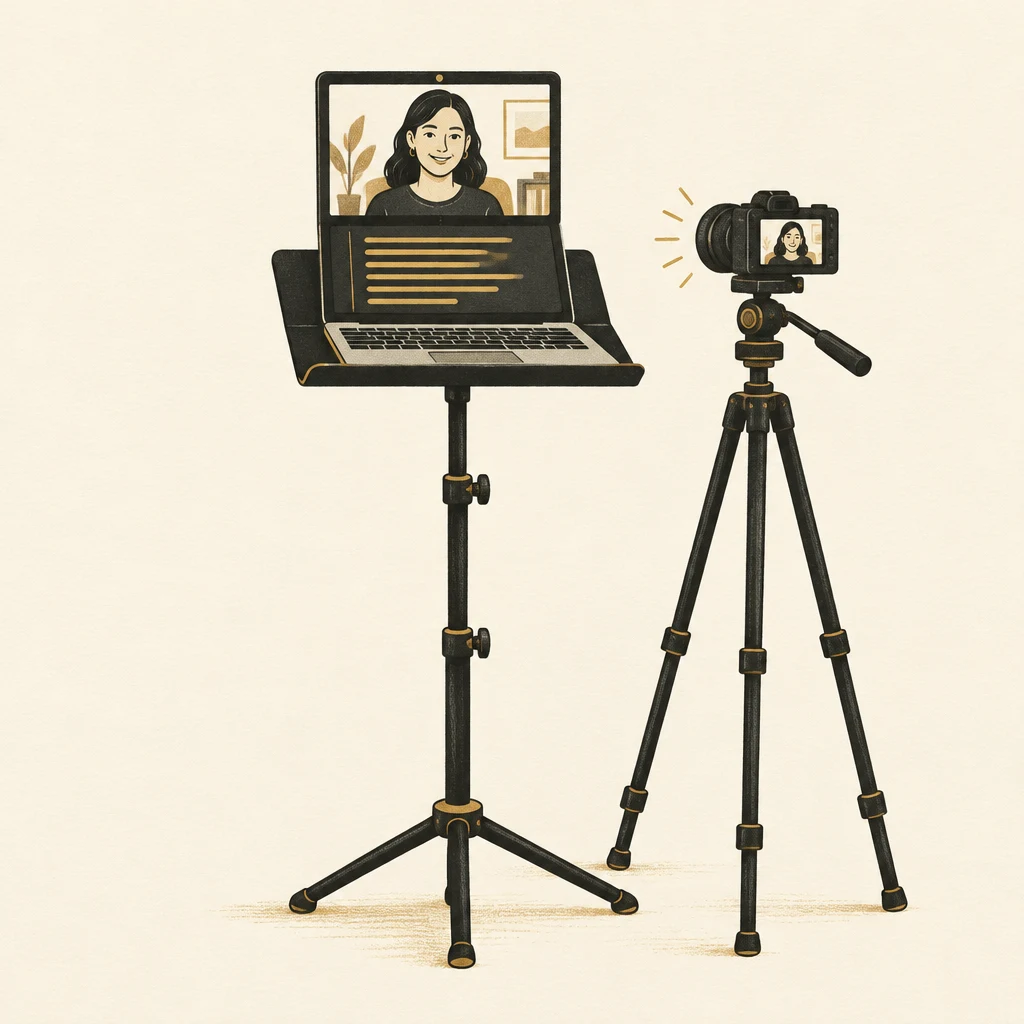
You will not always have a reader in the room. The goal is simple: put your virtual reader exactly where an in-person reader would stand, right beside the lens at your eye level, so your eyeline stays tight to camera.

Laptop stand or music stand

$25 to $60

Examples: Adjustable laptop riser, orchestral music stand

Why it is a good pick: Raises your laptop so the reader on screen sits at your eye level, just beside or behind the camera. A music stand works well because it adjusts to standing height in seconds.

Watch out: Music stands wobble. Tighten every joint, keep the laptop centered and never bump it mid-take.

Teleprompter app on your laptop

$0 to $30

Examples: Free or low-cost teleprompter apps and browser prompters

Why it is a good pick: Scrolls your sides on screen as a safety net when you are not fully off book. Place the text window directly under the webcam, shrink it to a narrow column and slow the scroll so your eyes barely move.

Watch out: Reading is visible in your eyes. Keep glances short and rare, and never let the window sit far from the webcam.

One earbud or a small speaker

Use what you own

Examples: Wired earbud in one ear, or a small speaker behind the laptop

Why it is a good pick: Lets you hear your reader clearly without their voice blasting into your mic. One earbud keeps your other ear on the room and your own voice.

Watch out: An open speaker near your mic causes echo and feedback for your reader. Test both directions before you roll.

Category 07 · Echo

Room sound treatment

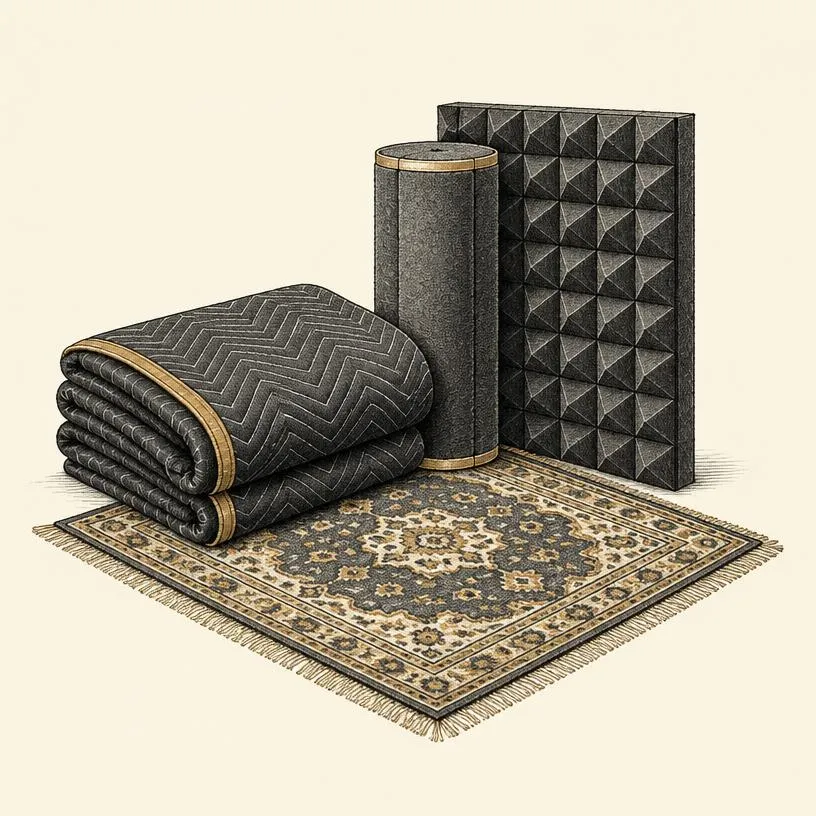
Bare walls and hard floors bounce your voice back into the mic. Soft surfaces absorb that echo and make any mic sound better.

Moving blankets

$15 to $40

Examples: Heavy quilted moving blankets

Why it is a good pick: Hang behind the camera or drape off-frame to kill echo cheaply.

Watch out: Keep them out of the shot.

Area rug

Use what you own

Examples: Any thick rug under your mark

Why it is a good pick: Hard floors cause the hollow sound casting notices first.

Watch out: Tape the edges so you do not trip on a move.

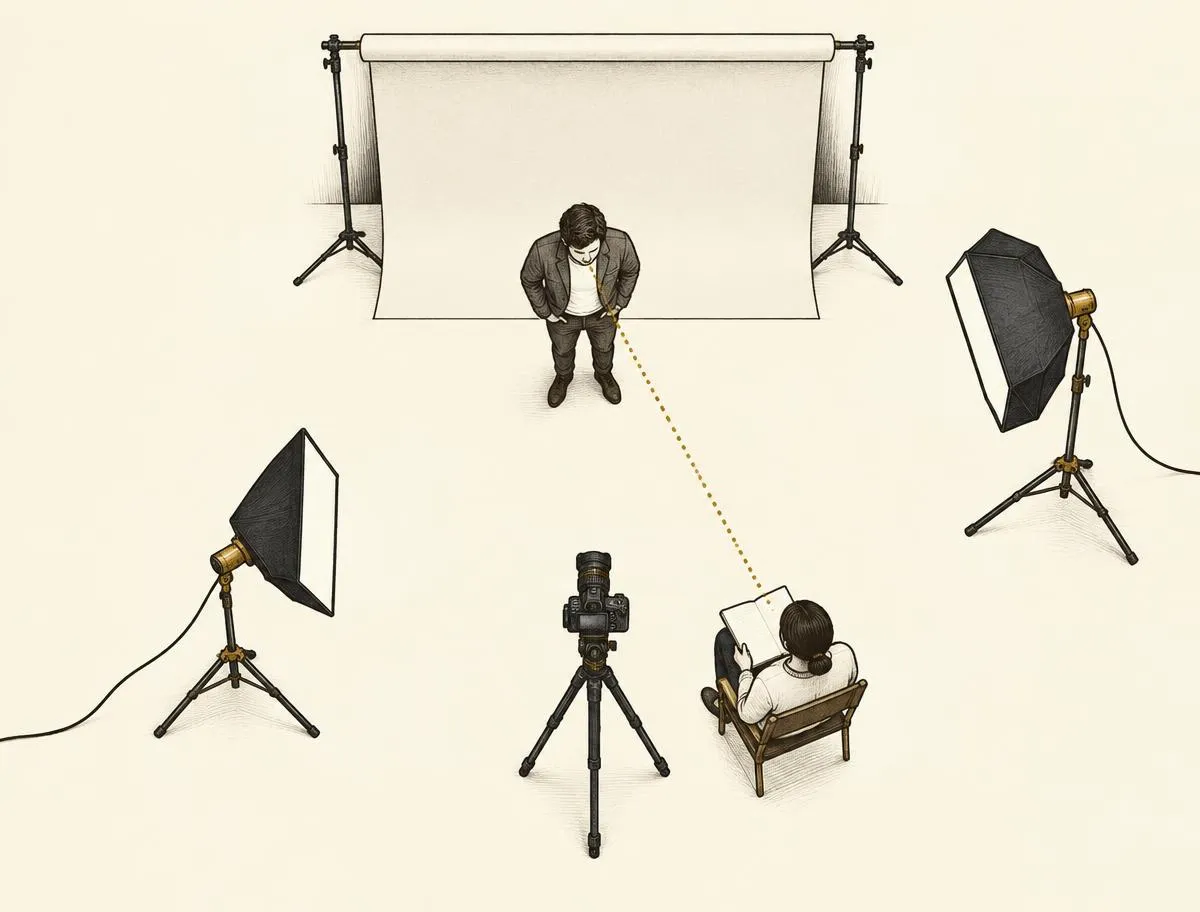
How to arrange your self-tape setup

Overhead diagram of a self-tape setup: actor in front of a backdrop, camera on a tripod, reader beside the camera and two softbox lights at angles
  1. Backdrop: stand 3 to 4 feet in front of it so your shadow falls out of frame.
  2. Camera: 4 to 6 feet from you at eye level.
  3. Reader: right beside the lens so your eyeline stays tight to camera.
  4. Key light: about 45 degrees to one side, slightly above your eyes.
  5. Fill light: opposite side, dimmer, to soften shadows.

Pre-roll checklist

  • Phone on airplane mode and plenty of storage free
  • Lens wiped clean
  • Camera at eye level, medium close-up framing
  • Focus and exposure locked
  • Main light at 45 degrees, catchlights in both eyes
  • Mic on and tested, reader quieter than you
  • Fans, AC and notifications off
  • Reader beside the lens for a tight eyeline
  • Virtual reader on a stand at lens height, audio tested both ways

Self-tape equipment questions

What equipment do I need for a self-tape audition?

At minimum: a phone, a tripod at eye level, soft light on your face, an external mic and a plain background. Everything else is an upgrade.

Is an iPhone good enough for self-tapes?

Yes. Any recent iPhone or Android phone records more than enough quality for casting. Light and sound matter far more than the camera.

What color backdrop is best for self-tapes?

Medium gray or medium blue work for most skin tones and wardrobe. Avoid white, black and patterns.

Ring light or softbox for self-tapes?

A diffused LED panel or softbox gives softer, more natural light. A ring light is fine for commercial reads or as a fill light.

Where should my reader stand?

Right beside the lens, at your eye level, so your eyeline stays close to camera and casting sees both eyes.

How do I set up a virtual reader for a self-tape?

Put your laptop on a stand or music stand at your eye level, right beside the camera, with the reader on a video call. If you use a teleprompter app for your sides, keep the text window directly under the webcam in a narrow column. Test the sound both ways with a short recording before the real take.

Go deeper